
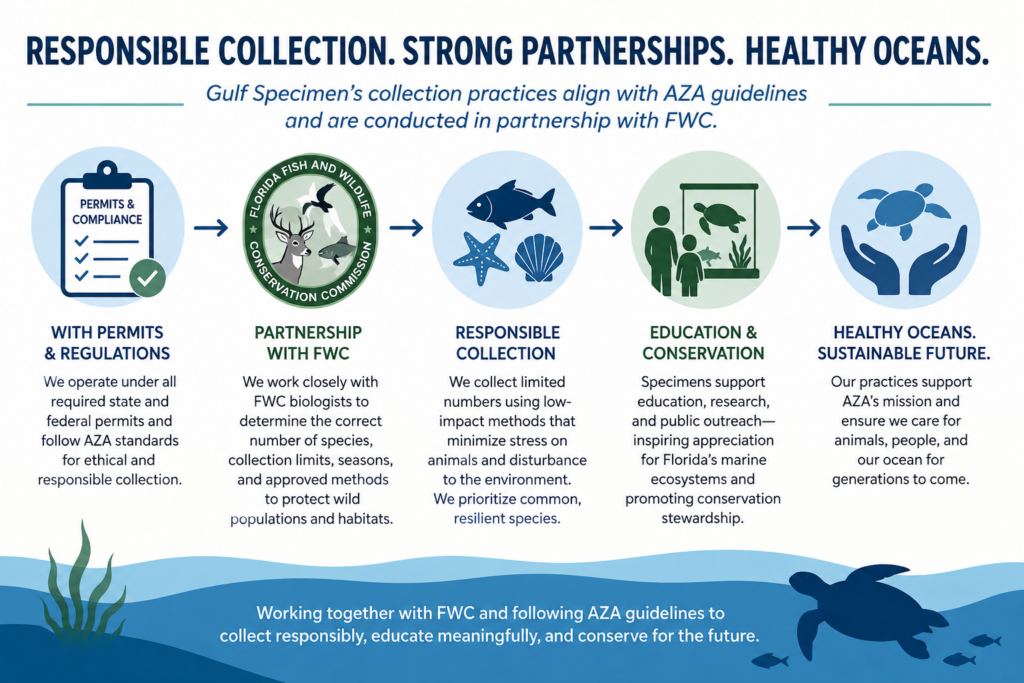
At Association of Zoos and Aquariums standards emphasize ethical, sustainable, and conservation-focused animal collection practices that prioritize animal welfare, environmental stewardship, and long-term ecosystem health. Gulf Specimen Marine Laboratory follows collection procedures that closely align with these principles through responsible field collection, careful species management, and a strong commitment to education, conservation, and rehabilitation.
Our collection activities are conducted in close coordination with Florida Fish and Wildlife Conservation Commission (FWC) to ensure that all harvesting practices remain sustainable and environmentally responsible. Gulf Specimen operates under all required state and federal permits and works with FWC biologists and regulations to determine appropriate collection limits, seasonal considerations, and approved collection methods for various marine species. This collaboration helps ensure that wild populations remain healthy and that collection activities do not negatively impact local ecosystems or sensitive habitats.
Specimens are collected in limited numbers using low-impact techniques designed to minimize stress on animals and disturbance to their environment. Gulf Specimen prioritizes the collection of common, resilient species when appropriate and continuously evaluates collection practices to ensure they remain consistent with current conservation science and wildlife management recommendations.
In alignment with AZA guidelines, Gulf Specimen also emphasizes the educational and conservation value of each collected animal. Many specimens play an important role in public outreach, hands-on learning experiences, scientific observation, and fostering appreciation for Florida’s marine ecosystems. Collection efforts are guided by animal welfare considerations, proper transport and acclimation procedures, and ongoing veterinary and husbandry oversight.
Additionally, Gulf Specimen’s work in sea turtle rehabilitation, marine conservation, aquaculture, and public education supports broader AZA goals of protecting biodiversity, advancing scientific understanding, and inspiring environmental stewardship. Through these practices, Gulf Specimen remains committed to maintaining ethical, sustainable, and conservation-driven standards in all aspects of animal collection and care.